
Risk Is Not the Problem.
Unseen Risk Is.
Every exit carries uncertainty.
The business may still depend on you more than you realize. Your leadership team may be less prepared than it appears. Your family may have a different vision for what comes next. And the identity, purpose, and structure your company has provided may be harder to replace than expected.
None of those risks automatically mean you should delay your exit.
But they should not remain invisible.
The Exit Risk Assessment helps you identify where risk exists while you still have time to reduce it.
See What Your Exit Could Change Before It Changes Everything.
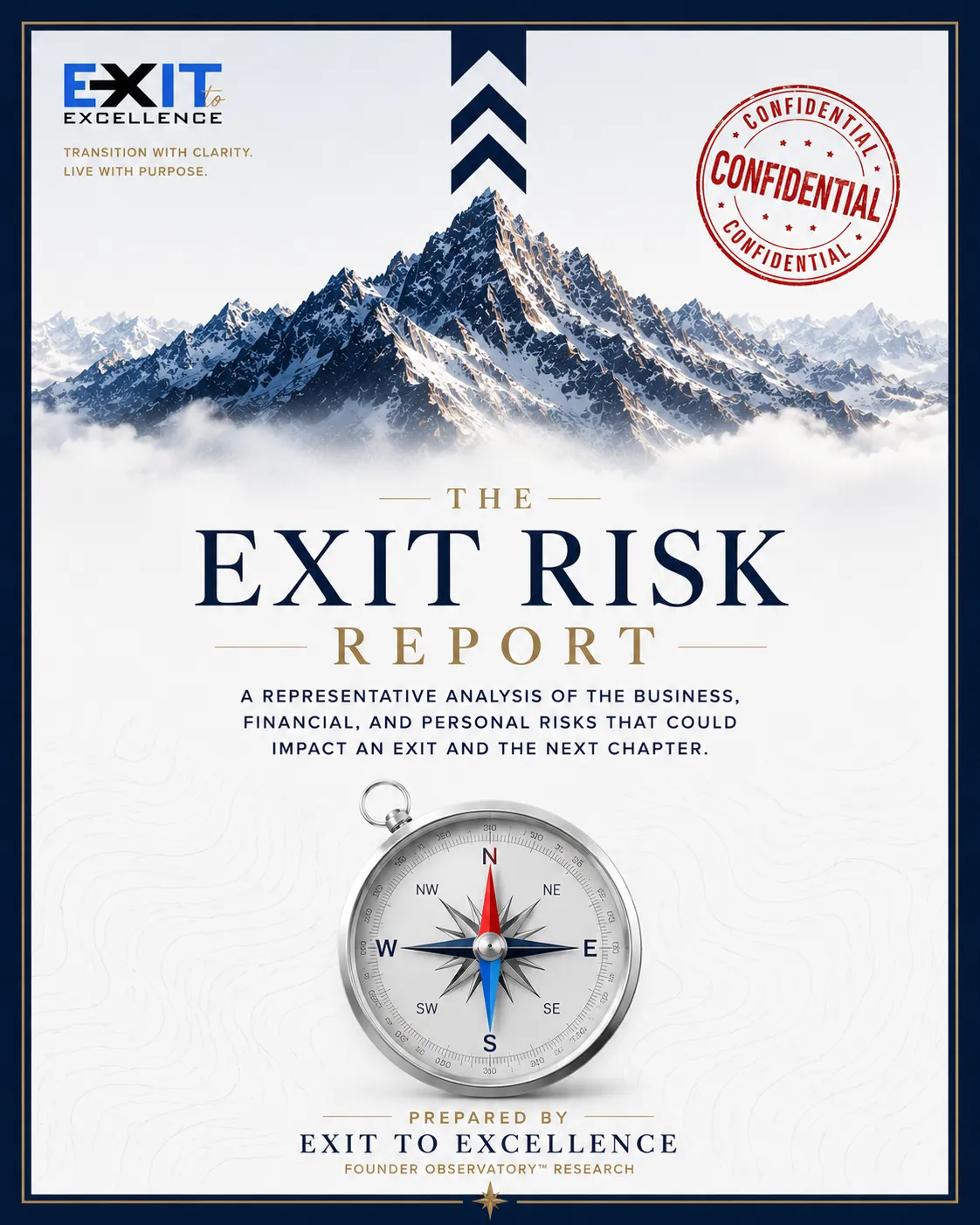
Your Personalized Exit Risk Report Includes:
Highest risk areas
Hidden dependencies
Post exit vulnerabilities
Immediate priorities
Risk reduction recommendations
This is not a readiness score designed to reassure you.
It is a diagnostic designed to show you what deserves a closer look.
Takes 10 minutes. Private. No confidential financials required. No obligation.
Your Advisors Are Evaluating the Transaction.
Who Is Evaluating Everything the Transaction Will Change?
Your attorney examines legal risk.
Your CPA examines tax risk.
Your investment banker examines deal risk.
Your wealth advisor examines financial risk.
But an exit changes more than ownership.
It can change your role, your relationships, your daily structure, your sense of significance, and the future you thought you were buying.
The transaction can be financially complete while the founder remains personally unfinished.
Discover how prepared you are for your transition with our Exit Readiness Assessment. This tool evaluates key areas of your exit strategy, helping you gain the clarity and confidence needed to move forward with purpose and fulfillment.
Traditional exit planning focuses almost entirely on the business.
We measure the entire system your exit will change.
Business Risk
Owner dependency
Operational readiness
Succession
Leadership depth
Enterprise value
Transferability
Founder Risk
Embarking on an exit from your business is one of the most significant transitions you will experience as an entrepreneur.
Our comprehensive Exit Readiness Assessment is designed to measure your preparedness across key areas, ensuring you can move forward with confidence, clarity, and a sense of fulfillment.
Identity
Relationships
Purpose
Well-being
Financial confidence
Life after the exit
A strong business does not automatically produce a prepared founder.
And a prepared founder cannot compensate for a business that is not ready to operate without them.
Both sides matter.


The Assessment Examines the Whole Exit System.
Most Exit Regret Begins Before the Closing.
It begins with assumptions that were never tested.
That the leadership team was ready.
That the family understood the plan.
That financial freedom would create personal freedom.
That the founder would know what to do next.
That relief would last longer than the closing dinner.
The transaction does not create every problem.
Sometimes it simply removes the structure that kept the problem quiet.
Takes 10 minutes. Private. No confidential financials required. No obligation.
Built From Founder Patterns, Not Generic Planning Theory.
The Exit Risk Assessment is informed by the Founder Observatory, Exit to Excellence’s research initiative examining the patterns founders experience before, during, and after an exit.
It was designed to reveal risks that conventional transaction planning frequently leaves outside the frame.
Because founders rarely regret the risks they understood and deliberately accepted.
They regret the ones they never knew were there.
Every Founder Has Exit Risks.
See Yours While You Still Have Time to Do Something About Them.
Why This Matters If You Are Not Ready to Sell
Many founders assume this work begins when they decide to exit.
It doesn't.
It begins when they realize the business they built has also been building them.
Every decision you make today is shaping the life you will eventually step into.
The stronger your business becomes, the more important these questions become.
Because one day, through sale, succession, leadership transition, or simply stepping back, your company may no longer
need everything you have spent years becoming.
That does not diminish your value.
It means your next chapter deserves the same intentional design as the one that created your success.
WHAT HAPPENS AFTER
You are not required to speak with anyone. Some founders review their results privately and take action on their own.
Others choose a short, private conversation to help interpret what surfaced and what it suggests about what they are exiting to. If you choose that option, it is framed as orientation, not a pitch.
Private. Non-Judgemental. No obligation.
After you complete the assessment, you may choose to schedule a private Exit Risk Review. The purpose is simple: interpret what surfaced, identify your largest exposure, and clarify what needs attention before the transaction defines your next chapter by default.
Start building your post-exit legacy today. Schedule your complimentary troubleshooting session and we’ll help you uncover your N.E.X.T. with confidence.
Doing nothing is not neutral.
If you don’t decide what you’re exiting to, others will decide for you.
This assessment exists to give you visibility before that happens.
Frequently Asked Questions
What does the Exit Risk Assessment measure?
It looks at the personal, relational, operational, financial, and legacy-related areas that can create friction before, during, or after an exit.
Is this assessment only for founders who are ready to sell now?
No. It is useful for founders considering a future exit, owners actively preparing for one, and leaders who want to understand where they may be personally underprepared.
How long does it take?
Most founders can complete it in about 10 minutes, but the value comes from answering honestly rather than quickly.
Will I get a score?
Yes, but the score is not the point. The assessment is designed to show where risk, ambiguity, or misalignment may exist so you can decide what needs attention next.
What happens after I complete it?
You receive insight into your risk and may be invited to schedule a conversation to interpret the results and identify the next right step.
How is this different from a business valuation or exit risk score from an advisor?
Most exit readiness tools focus on the company. This assessment focuses on the founder and the human side of the transition.
What if my business is financially ready, but I’m not sure I am?
That is exactly the gap this assessment is meant to surface. A company can be ready for market while the founder is not ready for the life that follows
Can my spouse or advisor take it with me?
The founder should complete it first. In some cases, it may be useful to discuss the results with a spouse, advisor, or key stakeholder afterward.
What should I do if the assessment reveals a risk I was unaware of?
Do not treat it as failure. Treat it as intelligence. The goal is to find the gap before the transaction magnifies it.
What is an Exit Risk Assessment?
An Exit Readiness Assessment evaluates how prepared you and your business are for a successful exit. At Exit to Excellence, we've evolved this concept into an Exit Risk Assessment because readiness is only part of the equation.
Every founder has exit risks. The founders who regret their exits simply didn't see them in time.
Our assessment identifies the business, financial, and personal risks that could affect your transaction, your transition, and your life after the sale. Instead of simply asking whether you're "ready," it helps uncover the hidden risks you still have time to address.
After completing the assessment, you'll receive a personalized Exit Risk Report with prioritized insights and recommendations to help reduce risk before your exit.
How is this different from a traditional Exit Risk Assessment?
Traditional assessments focus primarily on the business, valuation, financial records, operations, leadership, buyer readiness, and deal preparation.
The Exit Risk Assessment evaluates the entire system your exit will change, including both business and founder risks. It helps uncover hidden dependencies, personal blind spots, and post-exit vulnerabilities that traditional planning often overlooks.
Who should take the Exit Risk Assessment?
The Exit Risk Assessment is designed for founders and business owners who expect to sell, transition, or step away from their company within the next one to ten years.
Whether you're actively preparing for a transaction or simply want to understand your current exposure, the assessment helps identify risks while you still have time to reduce them.
When should I take the Exit Risk Assessment?
The best time is before you're actively pursuing a sale.
The earlier you identify hidden risks, the more options you have to strengthen your business, prepare yourself personally, and improve the likelihood of a successful transition.
Do I need financial documents to complete it?
No.
The assessment is based on your knowledge of your business, your leadership team, your financial confidence, and your personal transition. Most founders complete it in about 10 minutes without gathering additional documents.
Is this useful if I already have an advisor?
Absolutely.
Your attorney, CPA, investment banker, and wealth advisor each play an important role in preparing your transaction.
The Exit Risk Assessment complements their work by identifying business and founder risks that often fall outside the scope of traditional transaction planning.
Founders Who Didn't See the Risks Coming
After building Sacred Rides over 23 years, Mike successfully sold the company he had dedicated much of his life to creating. Like many founders, he expected the closing to bring lasting fulfillment. Instead, he discovered the transaction solved a financial question, not a personal one.
"I got the signed purchase agreement. I got the wire transfer. I think it lasted... about eight hours."
Mike
After completing the sale of her business, Kerry expected to enjoy the freedom she had worked so hard to achieve. Instead, she found herself confronting a question she had never prepared for.
"I remember waking up the next day thinking, 'Who am I?' I didn't have a business card.
Kerry
Mark spent years preparing his company for a successful transition and intentionally reduced the business's dependence on him before selling. Even so, he was surprised by the emotional weight that followed the transaction.
"I had seller's remorse. I really did."
Mark
Carrie built a successful, transferable business and exited on favorable terms. Her experience reinforced that even well-prepared founders can underestimate the personal impact of stepping away.
"There's a complete loss of control, loss of identity, and a major shift in your life."
Carrie
FREE DOWNLOAD
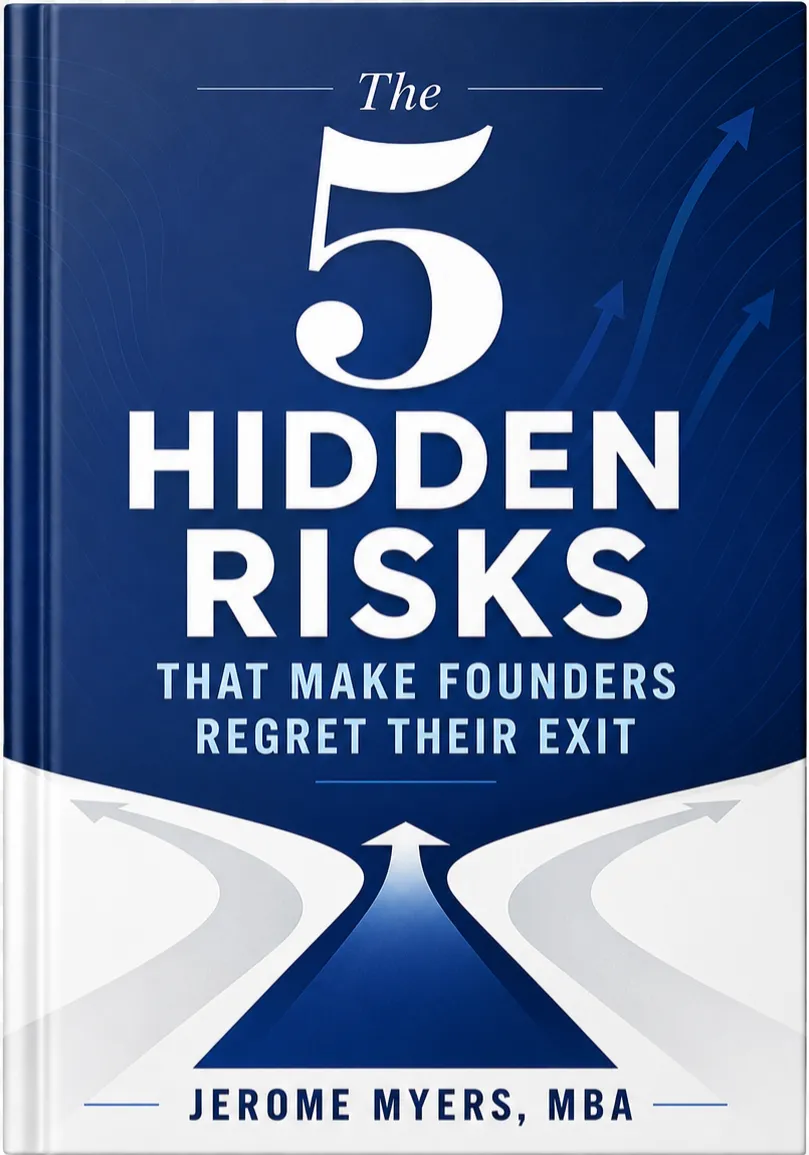
The 5 Hidden Risks That Make Founders Regret Their Exit
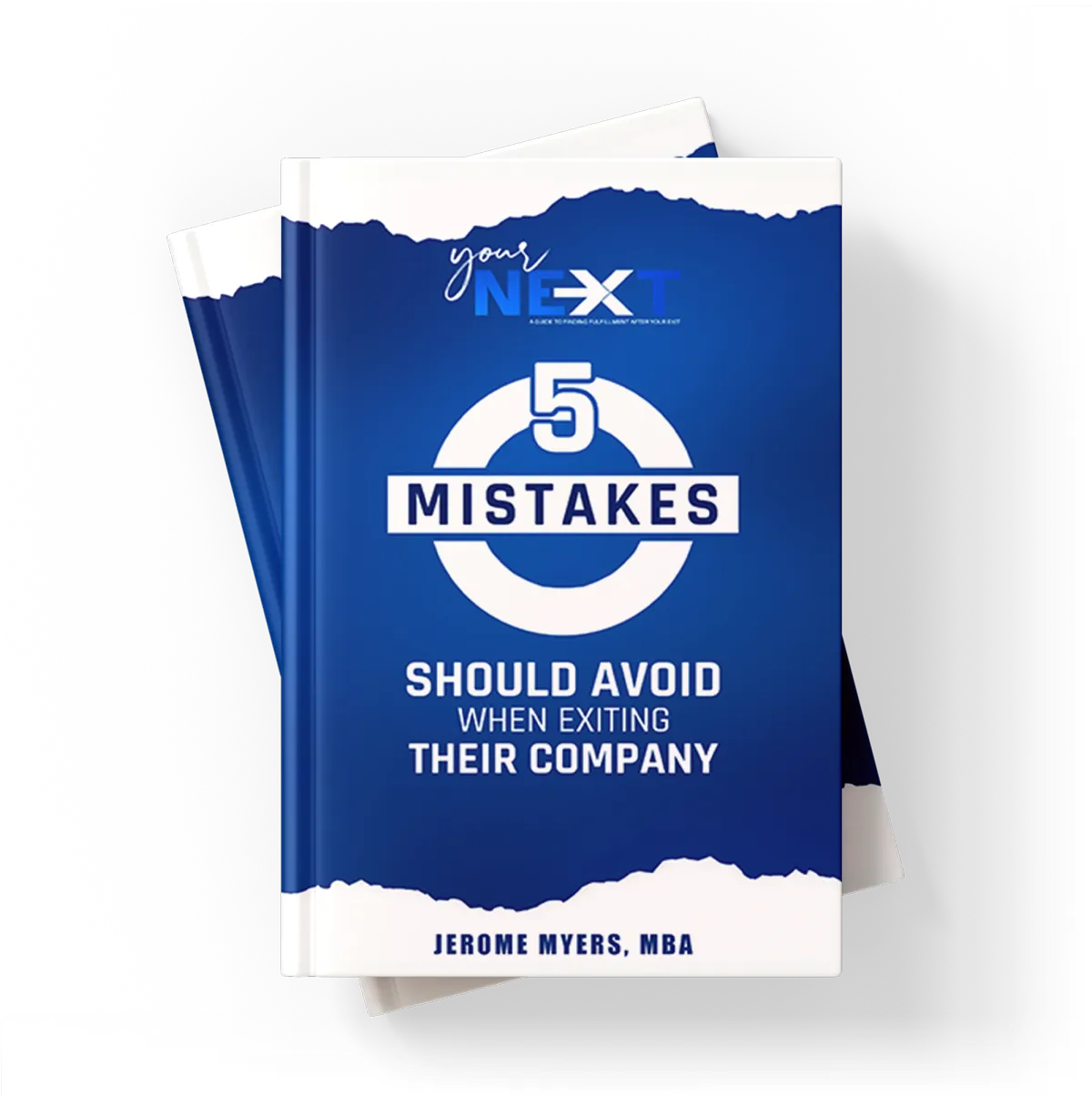
Discover common pitfalls founders face during exit and strategies to avoid them. Understand the Founder's Exit Paradox and apply these insights for a smoother transition, leading to a fulfilling, purpose-driven post-exit legacy.