
Founder Succession Planning: Preparing the Business and the Owner for What's Next
Most succession plans focus on a single question:
Who will take over the business?
It is an important question.
It is not the only question.
After working with founders before and after ownership transitions, I've learned that many succession plans fail for reasons that have nothing to do with legal documents, tax strategies, valuations, or organizational charts.
The business may be ready.
The successor may be ready.
The advisors may have done everything right.
Yet the founder struggles to let go.
Sometimes the transition gets delayed for years. Sometimes the founder remains involved in every decision long after the handoff was supposed to happen. Sometimes they successfully transition out of the company only to discover they never prepared for what came next.
Succession planning is not simply about replacing leadership.
It is about helping a founder transition from one season of life to another.
At Exit to Excellence, we help owners prepare for both sides of the equation: building a business that can thrive without them and creating a future they are excited to move toward.
Why Succession Planning Often Fails
Most business owners know they should have a succession plan.
The challenge is that many plans focus almost exclusively on the company.
The conversation typically revolves around:
Ownership transfer
Leadership development
Tax planning
Estate planning
Buy-sell agreements
Valuation and transaction strategy
All of those components matter.
However, there is another variable that often goes unaddressed. The founder.
For years, the business has likely provided structure, challenge, identity, relationships, and purpose. It may have shaped where you spend your time, who you spend it with, and how you define success.
When founders begin stepping away from that role, questions emerge that no legal document can answer:
Who am I when I am no longer the owner?
What will I do with my time?
How involved should I remain?
How will my relationships change?
What am I moving toward?
These questions often determine whether a succession plan succeeds or stalls.
The Hidden Cost of Owner Dependency
One of the most common obstacles to successful succession planning is owner dependency. The business depends on the founder for decisions. The team depends on the founder for direction. Customers depend on the founder for confidence.
And often, the founder depends on the business for identity. This dependency creates risk on both sides of the transition. The company becomes less transferable. Future leaders struggle to gain authority. The founder finds it difficult to step away.
Many owners assume succession planning begins when they identify a successor. In reality, succession planning begins when they reduce dependency. A business that cannot operate without its founder is not ready for succession.
Likewise, a founder who cannot envision life beyond the business is not ready either.
Succession Planning Is Not Retirement Planning
Many founders resist succession planning because they associate it with retirement. They imagine golf courses, beach houses, and slowing down. That is rarely what high-performing founders want.
Most entrepreneurs are not trying to stop contributing. They simply want the freedom to choose how they contribute.
Succession planning is not about doing less.
It is about creating the ability to do different.
For some founders, that means mentoring emerging leaders. For others, it means serving on boards, investing in new ventures, supporting charitable causes, or spending more time with family.
The goal is not withdrawal. The goal is intentional transition.
The Five Unexpected Causes of Exit

Discover how prepared you are for your transition with our Exit Readiness Assessment. This tool evaluates key areas of your exit strategy, helping you gain the clarity and confidence needed to move forward with purpose and fulfillment.
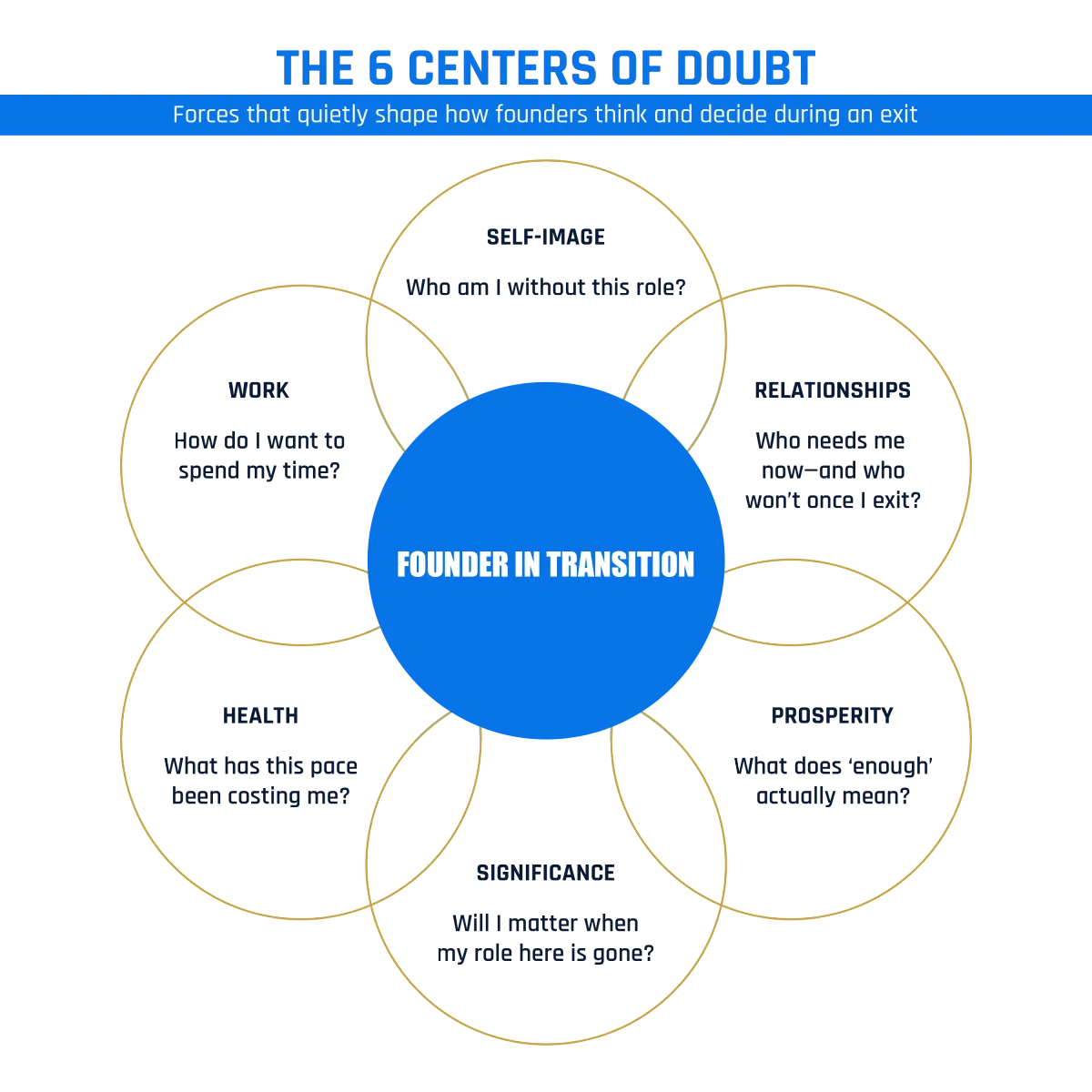
The Six Areas Every Founder Must Prepare For
Most succession plans address business continuity. Few address personal continuity. Through our work with founders, we have identified six areas that consistently shape the success of a transition.
Family Business Succession Planning
Family business succession planning introduces another layer of complexity. The questions extend beyond ownership and leadership.
They often involve:
Family dynamics
Generational expectations
Communication challenges
Legacy concerns
Sibling relationships
Leadership readiness
The technical aspects of succession matter. The emotional aspects often determine whether the plan succeeds. A successful family transition requires clarity, communication, and alignment among stakeholders long before ownership changes hands.
Signs You May Not Be Ready for Succession
You may have succession risk if:
Key decisions still depend on you
Customers expect direct access to you
Revenue slows when you step away
Leaders hesitate to act without your approval
Family members have conflicting expectations
You have not identified your next chapter
You cannot clearly explain what life after ownership looks like
These issues do not mean succession is impossible. They simply highlight where preparation is needed.
How Exit to Excellence Helps
Most advisors help founders prepare the business for transition. We help founders prepare themselves. Our process is designed to identify hidden risks, reduce owner dependency, clarify future direction, and help owners navigate the personal side of succession. Whether your transition is years away or already underway, the earlier you begin preparing, the more options you create for yourself, your family, and your business.
Take the First Step
A successful succession plan creates continuity for the company and clarity for the founder. If you are considering succession, leadership transition, family business continuity, or life after ownership, the best place to start is understanding your current level of readiness.
Take the Exit Readiness Assessment and discover the hidden factors that could impact your transition long before they become obstacles.
Frequently Asked Questions About Founder Succession Planning
What is founder succession planning?
Founder succession planning is the process of preparing a business and its owner for a successful leadership or ownership transition. While traditional succession planning focuses on transferring responsibilities, founder succession planning also addresses identity, purpose, relationships, and life after ownership.
When should I start succession planning?
The best time to begin succession planning is before you think you need it. Ideally, founders should begin preparing three to ten years before an anticipated transition. Starting early creates more options and reduces the pressure caused by unexpected events.
What is the difference between succession planning and exit planning?
Succession planning focuses on leadership continuity and ownership transition. Exit planning is broader. It includes succession planning while also addressing valuation, personal readiness, financial goals, and a founder's vision for life after the business.
How do I know if my business is too dependent on me?
Your business may be owner-dependent if key decisions require your approval, customers insist on working directly with you, revenue slows when you step away, or your leadership team struggles to operate independently. Reducing owner dependency is one of the most important steps in preparing for succession.
Is succession planning only for family businesses?
No. Every founder-led business can benefit from succession planning. Whether ownership transfers to family members, employees, management, private equity, strategic buyers, or an ESOP, a thoughtful succession strategy improves the likelihood of a successful transition.
What makes family business succession planning different?
Family business succession planning involves more than leadership and ownership transfer. It often requires navigating family dynamics, communication challenges, generational expectations, sibling relationships, and legacy concerns alongside traditional business considerations.
What happens if a founder is not ready to step away?
When founders are not prepared for transition, succession plans often stall. Some owners delay leadership transfers, remain involved in day-to-day decisions, or struggle with purpose after stepping away. Preparing the founder is just as important as preparing the business.
Can succession planning increase the value of my business?
Often, yes. Businesses that operate independently of the founder are generally more attractive to buyers, investors, lenders, and future leaders. Reducing owner dependency can improve transferability and potentially increase enterprise value.
What are the biggest risks to a successful succession?
Some of the most common risks include owner dependency, lack of leadership development, unclear communication, family conflict, founder identity challenges, and waiting too long to begin planning. Many transitions fail because the founder was not prepared for the personal side of succession.
What is the first step in succession planning?
The first step is understanding your current level of readiness. The Exit Readiness Assessment helps founders identify potential risks, uncover areas of owner dependency, and determine what preparation is needed before a transition occurs.
See What Our Clients Are Saying

"Working with Jerome at Exit to Excellence was a game-changer; his genuine empathy and actionable guidance not only earned my trust but also propelled my personal and business growth. I highly recommend their transformative services to anyone looking to advance professionally and personally."
Asia
Entrepreneur
"Working with Jerome has been a pivotal chapter in my journey as the head of a real estate investment company. His guidance has not only doubled my net worth but also opened doors to invaluable opportunities and connections, like CPAs and investors. Jerome's intuitive and humble approach made me feel comfortable to be vulnerable, enabling real growth."
Amy
Business Owner, Investor
"Jerome's thought-provoking questions and empathetic, non-judgmental approach created a transformative space for me, fostering significant personal and business growth. His straightforward guidance during critical decisions has proven invaluable, truly enhancing my resilience and professional success."
Larry
Founder, Investor
FREE DOWNLOAD
5 Mistakes Every Founder Should Avoid
When Exiting Their Company
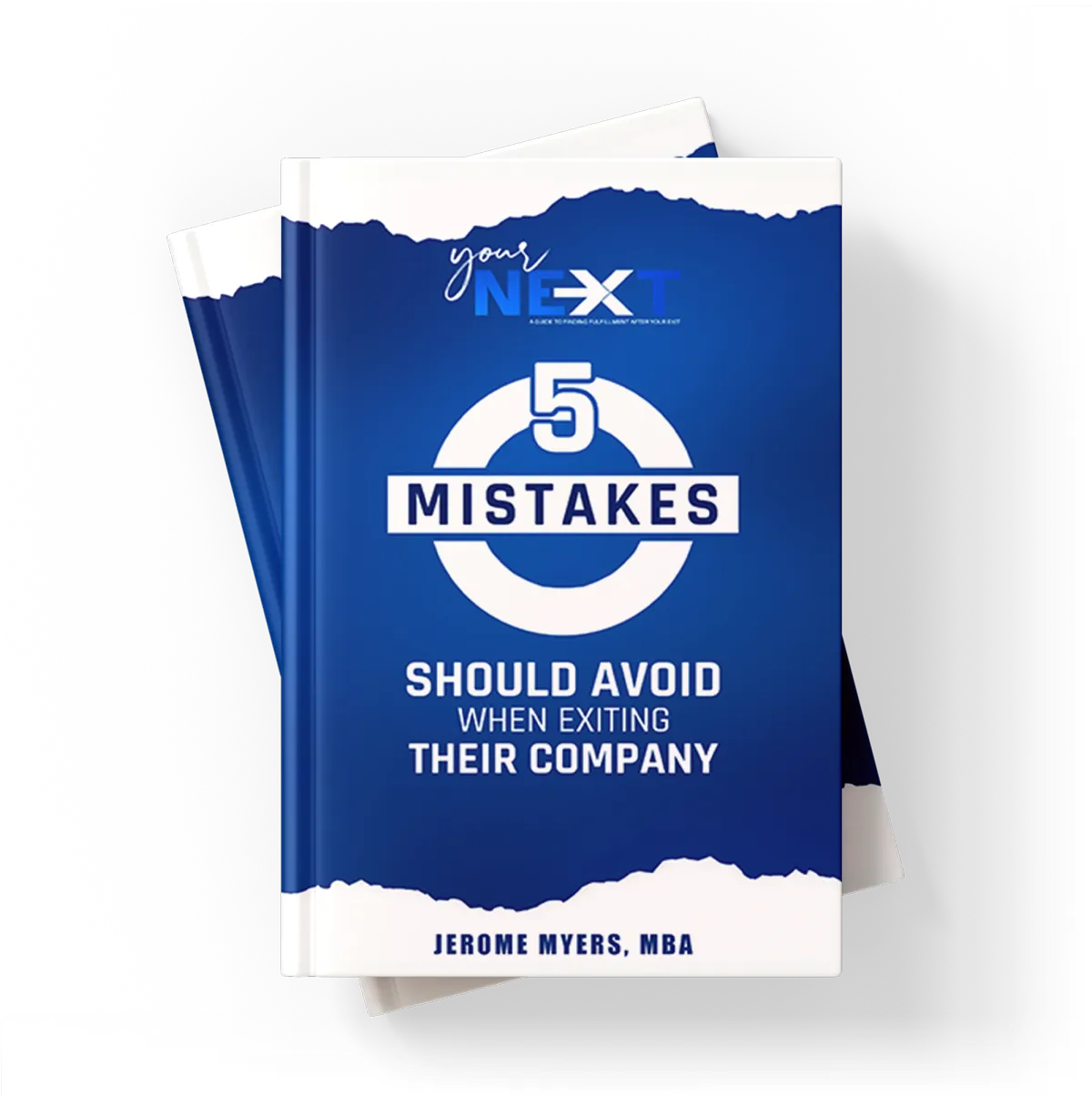
Discover common pitfalls founders face during exit and strategies to avoid them. Understand the Founder's Exit Paradox and apply these insights for a smoother transition, leading to a fulfilling, purpose-driven post-exit legacy.