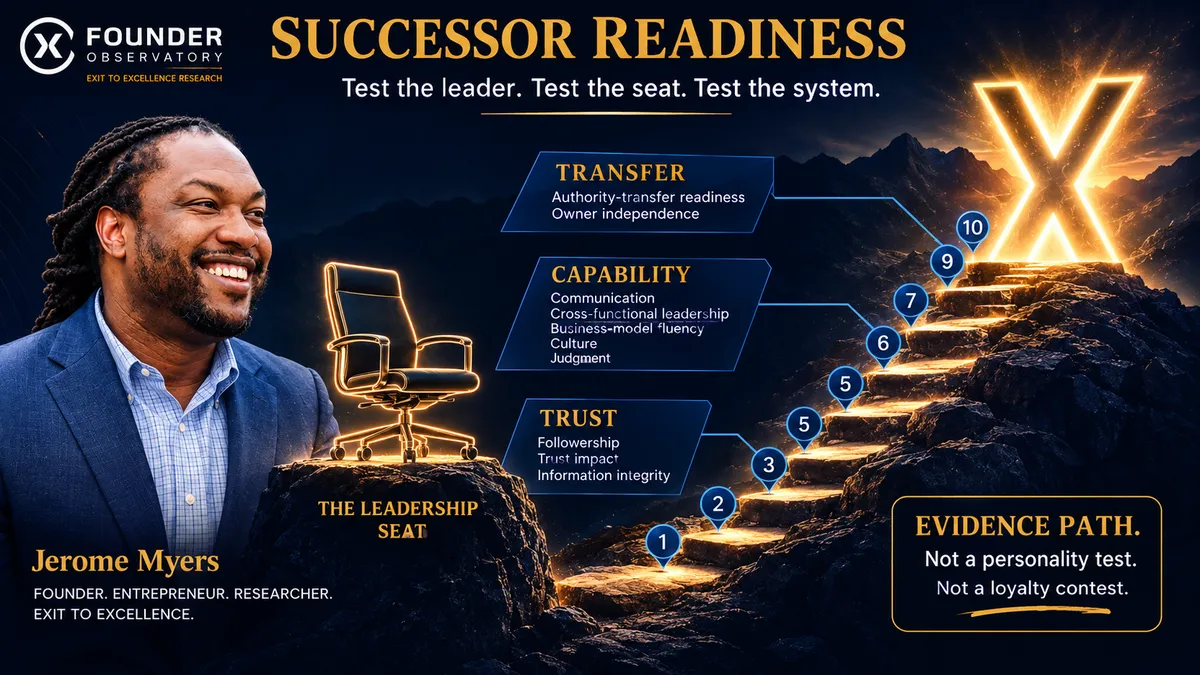
The Successor Is Not the Only One Being Tested
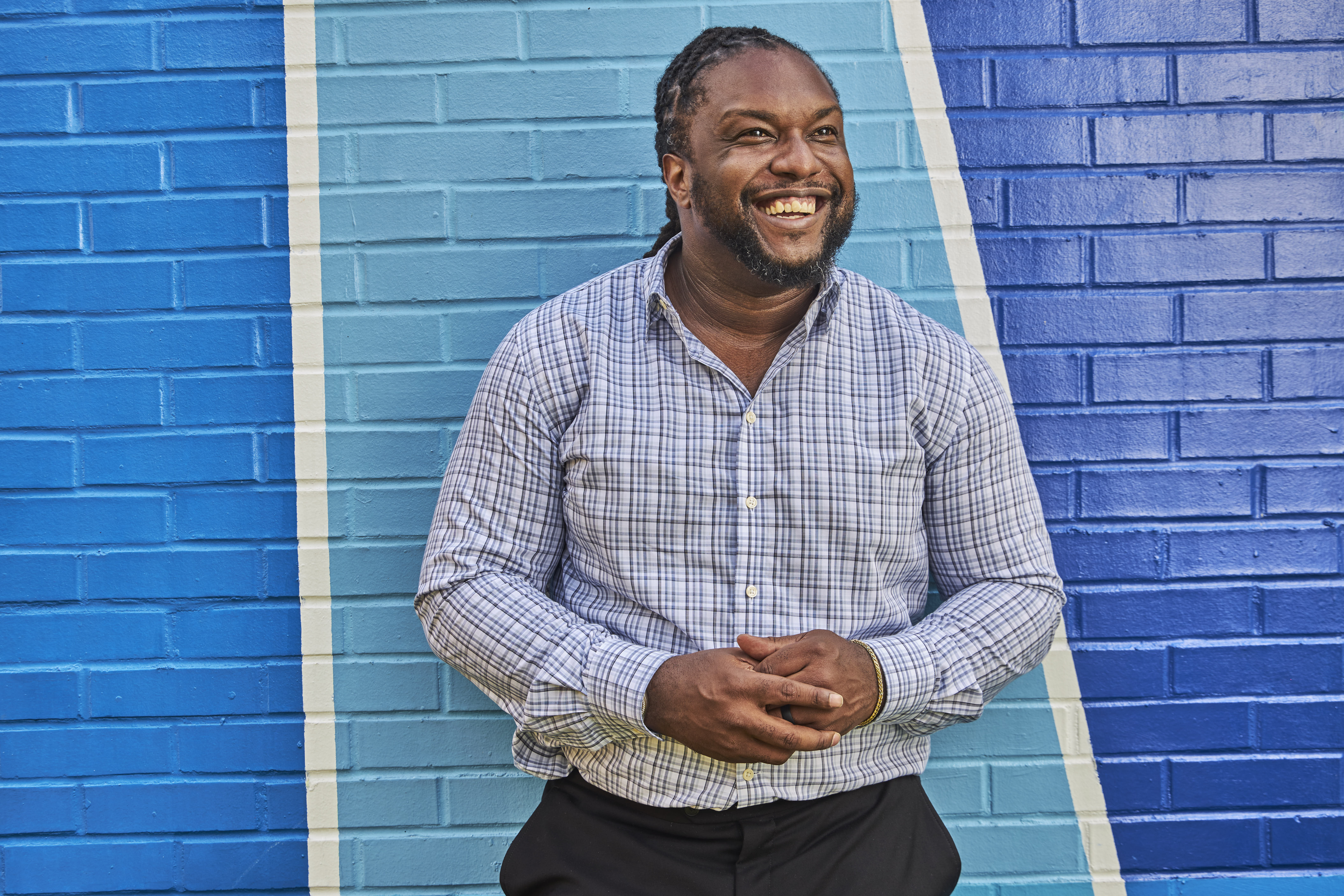 Jerome Myers
Published on: 15/10/2026
Successor readiness is not a personality verdict. This field case shows how to test the leader, the seat, and the organization with observable evidence.
successor readiness rubricsuccessor readiness assessmentsuccession planning for foundersbusiness succession planningfounder dependencyowner independenceleadership authority transferteam followershipsuccessor trustcommunication under pressureinformation integritycross functional leadershipbusiness model fluencyculture stewardshipdecision judgmentfuture enterprise leaderleadership developmentbusiness independencefounder transition riskexit planningExit Risk AssessmentJerome MyersFounder ObservatoryExit to Excellence